

By The Numbers
The Healthcare Coverage Crisis
The numbers tell a stark story. Healthcare systems across America are grappling with unprecedented challenges that threaten the foundation of surgical care delivery. These critical statistics reveal the scope of the crisis facing hospitals today.
-
- 30,200 Projected surgeon shortage by 2034
- 53% Of surgeons report burnout symptoms
- 42% Of Americans will be over 50 by 2034
- $42.5B Increase in hospital labor costs (2021-2023)
Discover The Fractional Model
Why Fractional Coverage is the Future?
Solve critical staffing challenges while improving outcomes for hospitals, surgeons, and patients
For Hospitals: Predictable costs, 24/7 coverage, reduced burnout among staff, increased surgical volume, and enhanced continuity of care without full-time employment burdens.
For Surgeons: Work-life balance with predictable 7-10 day rotations, competitive pay without administrative overhead, and the ability to focus purely on clinical excellence.
For Patients: Consistent, high-quality surgical care from dedicated teams who integrate with hospital systems and become part of the community.


Real Results:
A 6-Year Transformation
-
The numbers tell a stark story. Healthcare systems across America are grappling with unprecedented challenges that threaten the foundation of surgical care delivery. These critical statistics reveal the scope of the crisis facing hospitals today.
- 30,200 Projected surgeon shortage by 2034
- 53% Of surgeons report burnout symptoms
- 42% Of Americans will be over 50 by 2034
- $42.5B Increase in hospital labor costs (2021-2023)
Download The Whitepaper
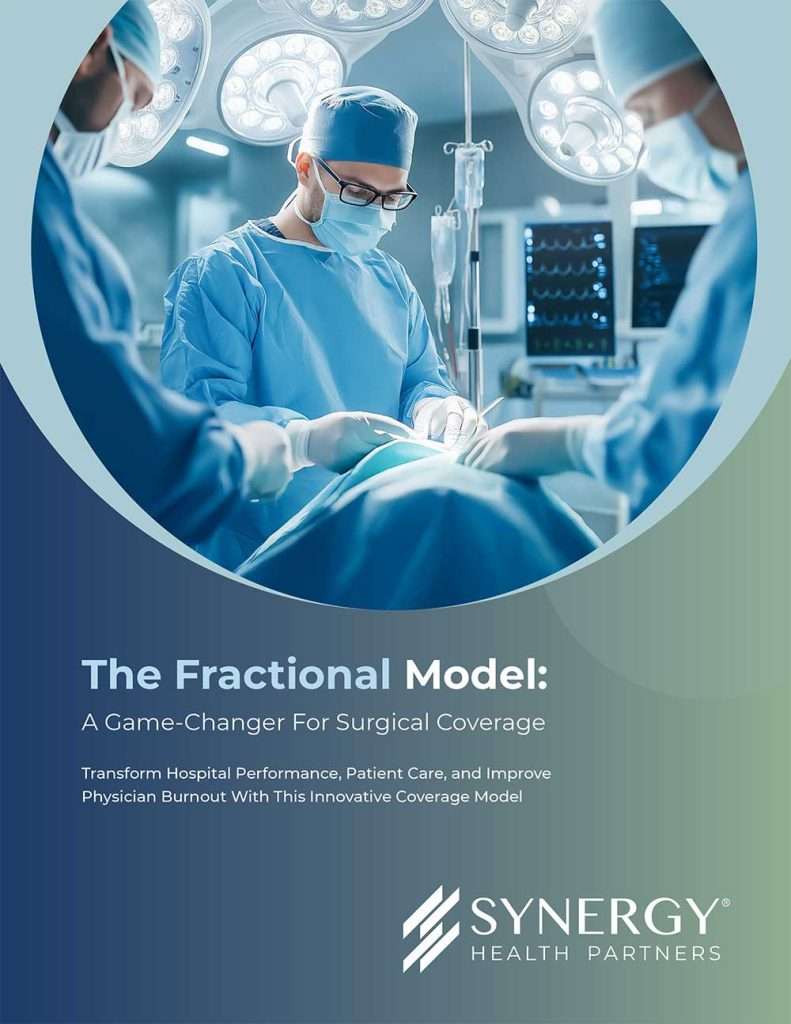 Download this comprehensive 12-page whitepaper to discover how the fractional model can transform your surgical coverage challenges into strategic advantages.
What You’ll Learn:
- Detailed comparison of coverage models (locum vs. permanent vs. fractional)
- Complete case study with 6-year transformation timeline
- Financial impact analysis and ROI projections
- Implementation guide and best practices
- Surgeon testimonials and hospital leadership insights
- Key considerations for selecting coverage partners
Real-World Examples
Case Studies

How a Rural Hospital Launched an Orthopedic Surgery Program From the Ground Up
The Problem Even before the federal spending bill signed in July 2025 introduced sweeping changes, rural hospitals across the United States were already under immense strain. Many were closing their doors, leaving communities with fewer healthcare options and forcing...

How a Level II Trauma Center Used the Surgicalist Model to Bring Stability and Predictable Staffing to a Five-County Service Area
The Problem For any Level II Trauma Center—which must provide immediate surgical coverage 24/7—it is critical to maintain predictable staffing levels regardless of location. For one rural facility serving thousands of patients across five counties, this became an...

How the Surgicalist Model Rebuilt an Orthopedic Program and Achieved Level II Trauma Designation
Burnout Among Existing Surgeons Was Rising, Recruitment Efforts Were Falling Short, and the Future of the Orthopedic Program Was in Serious Doubt. The Issue: A Hospital System Facing an Uphill Battle A prominent regional hospital system in the northeastern United...